

Why AI Success Starts with Trusted Data
When more than 75% of AI projects fail and only 7% of enterprises say their data is ready for AI, you’d expect any follow-up discussions to focus on algorithms. Or model selection. Or maybe vendor choice. But they almost never do.
At this year’s Data Innovation Summit, our two sessions approached this contradiction from opposite directions, one starting with the AI, the other with the legacy system underneath it. And still, we landed on exactly the same conclusion.
Approach 1: The AI hallucination problem isn't an AI problem
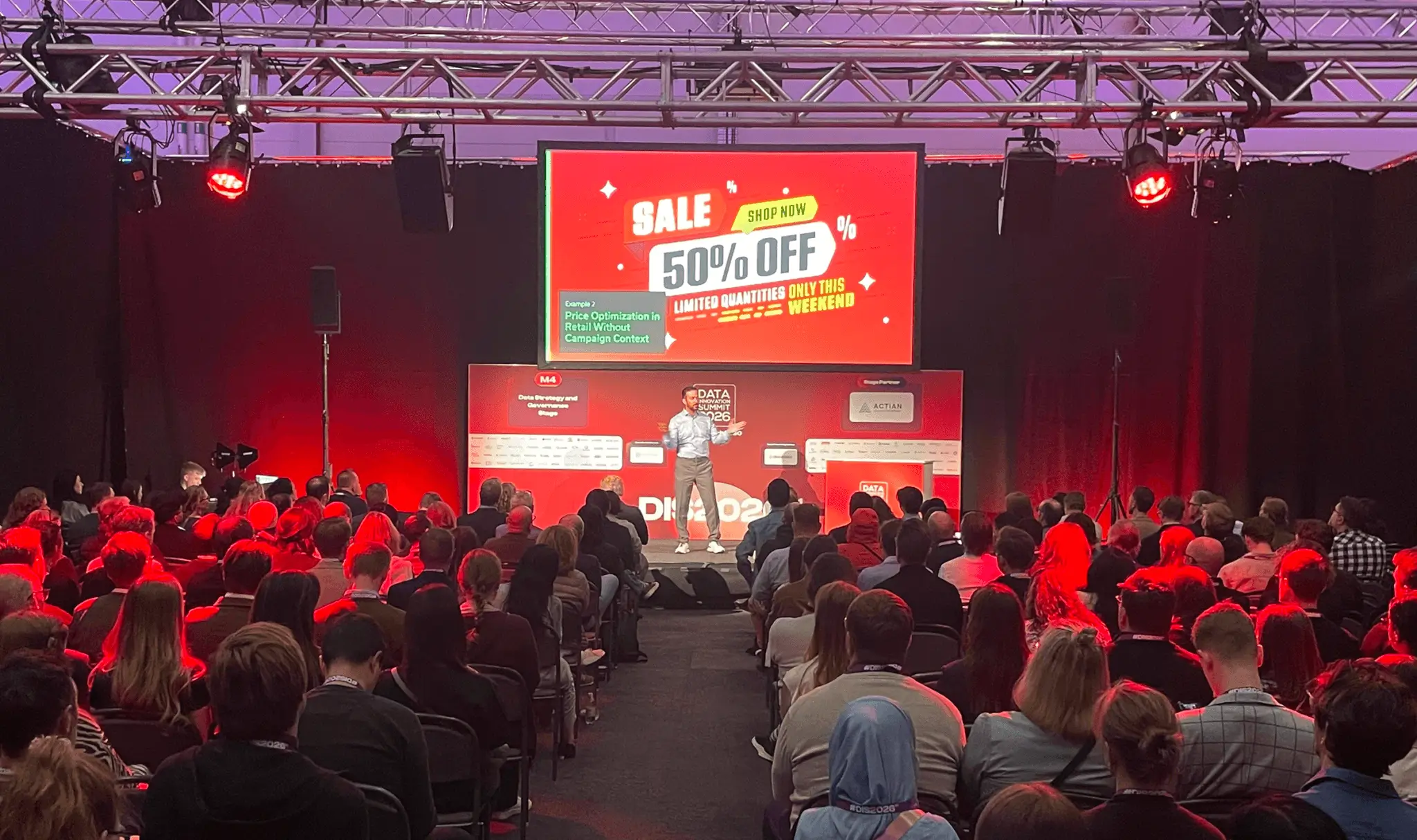
In “Data Quality Is Not Enough: Stop AI Hallucinations with Trusted Data,” Christian Stadlmann, CRO at One Data, opened with a number that doesn’t make for comfortable conference small talk: more than 75% of AI projects fail, and it’s rarely the model’s fault.
The pattern is consistent across industries.
Take predictive maintenance at a factory running 10,000+ machines. The sensor data was there. The algorithm worked. The problem? The data lacked the context to distinguish a routine cleaning cycle from the early signals of an actual failure. So the AI treated both the same and flagged false alarms until someone manually taught it the difference. Or take a retail discounting model that confidently linked promotions to higher sales. The data showed a clean correlation. What the data didn’t show was a TV ad campaign running at the same time – the actual driver behind the spike. Same pattern in both cases: incomplete, context-poor data leading a perfectly functional algorithm to a confidently wrong conclusion.
With these examples, it becomes obvious that bad data doesn’t just produce errors. It multiplies them: confidently, at scale, and with a polish that makes them harder to catch.
Approach 2: Why your SAP BW migration is really an AI conversation
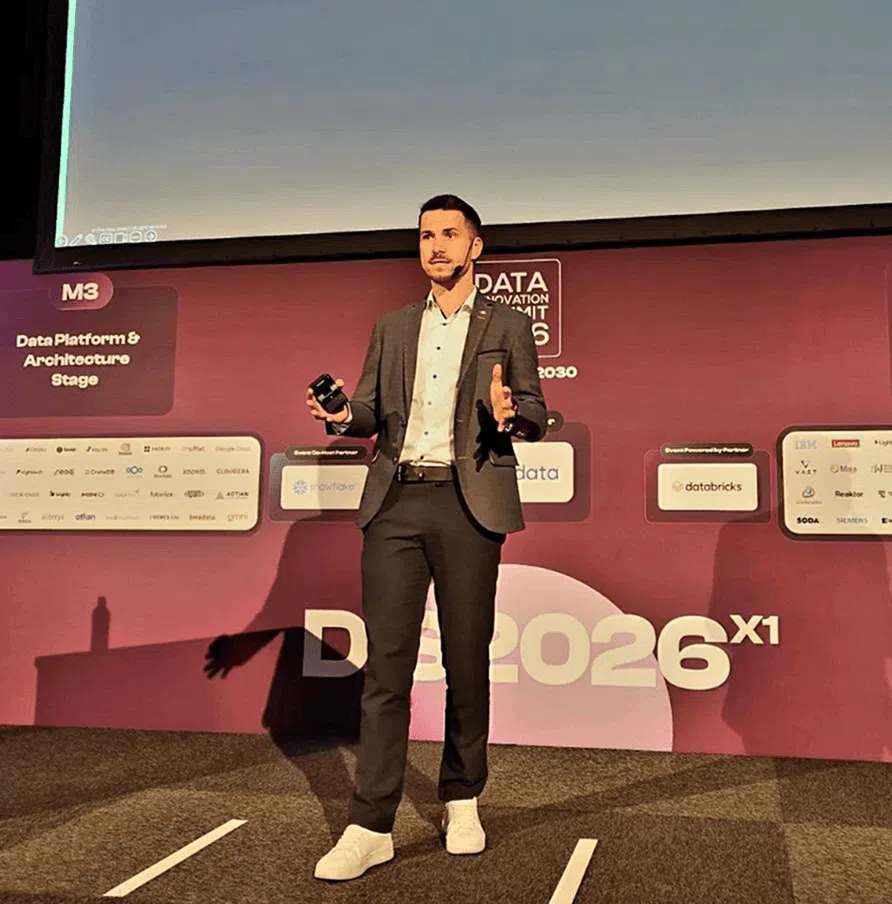
In “Beyond Migration: Modernizing SAP BW from Legacy to Future-Ready Data Foundation,” Tim Föckersperger, Account Executive at One Data, opened with a scene most data leaders will recognize: A CFO walking into a steering committee, seeing the SAP BW migration line item and saying: “I’m not spending ten million euros to get back the same reports we already have.”
And honestly? He’s right. If a migration just lifts the same legacy reports onto a new platform, it really is a waste of budget and time.
With mainstream maintenance for SAP BW 7.5 ending in 2027, the migration has shifted from an “if” to a “how” for thousands of enterprises. But many organizations are still framing the discussion the wrong way. The debate gets stuck on the platform choice – BDC, Fabric, Databricks, Snowflake – or on the Brownfield-versus-Greenfield approach. Meanwhile, the real lever sits one layer deeper.
Only 7% of enterprises say their data is fully AI-ready, according to a recent Cloudera and Harvard Business Review study.
A migration becomes valuable not when you’ve picked the perfect platform, but when you use the moment – the budget, the C-suite attention, the once-in-a-decade momentum – to build a trusted, governed data foundation underneath whatever platform you land on.
A migration cleans things up once. Continuous automation keeps them clean.
The common thread: Trust, Alignment, Automation
We were on two stages. Discussed two different problems. And it all came down to the same three fundamentals.
Trust
Data has to be accurate, fresh, complete, and governed before it powers anything. Without it, AI produces confidently wrong answers, and migrations rebuild the same mess on a new platform.
Alignment
Business and data teams need a real contract – not just a document of specifications. Business decides what to keep, what to refactor, and what to finally retire.
Automation
Manual pipelines and one-off cleanups don’t survive in the real world. The engine that gets you through a migration is the same one that powers your next AI use case.
The AI projects that succeed, and the SAP BW migrations that don’t quietly turn into regret a few months later, tend to get these three things right.
Be able to trust your data first!

Curious where your data foundation stands?
Whether you’re scaling AI initiatives or preparing for an SAP BW migration, One Data helps you build trusted, AI-ready data foundations that hold up in production.